
Fall Home Maintenance Checklist for New Homeowners
Heads up: this post contains affiliate links. If you buy through them, we may earn a small commission at no extra cost to you. This list is based on research and common homeowner guidance, not hands-on product testing. Learn more.
Your first fall in a new house can feel like a pop quiz nobody warned you about. The leaves come down, the nights get cold, and suddenly you're wondering when you last changed the furnace filter (or if the last owners ever did). We put this checklist together the way we'd want it: plain, doable, and honest about which jobs belong to a pro.
Work through it over a few weekends. You don't need to do it all at once.
Outside the house
1. Clean the gutters and check the downspouts
Clogged gutters can send water over the edge and toward your foundation. Once most of the leaves are down, scoop out the debris and run a hose through to make sure water flows out the downspouts and away from the house.
What to look for: a sturdy ladder rated for your weight, a plastic gutter scoop, and work gloves.
- Look for: gutter cleaning scoop
- Look for: work gloves
- Look for: downspout extension
If your gutters are on a second story or the roofline is steep, please hire a gutter or roofing pro. Ladder falls are a real risk, and it's not worth it.
2. Look at the roof from the ground
You don't need to climb up there. Grab binoculars or zoom in with your phone and look for missing, cracked, or curling shingles and anything that looks off around the chimney or vents. If you spot problems, call a licensed roofer. Roof repairs and walking on a roof are jobs for a qualified pro.
3. Seal gaps around windows and doors
Cold air sneaks in through small gaps. Check the caulk around exterior window and door trim. If it's cracked or pulling away, scrape out the old stuff and apply new exterior caulk on a dry day.
What to look for: caulk labeled for exterior use and rated for the temperatures where you live, plus a basic caulk gun.
- Look for: exterior caulk
- Look for: caulk gun
- Look for: weatherstripping for doors
4. Shut off and drain outdoor faucets
If you get freezing temperatures, water left in outdoor faucets and hoses can freeze. Disconnect hoses, drain them, and store them. If your home has an interior shutoff valve for the outdoor faucet, close it and open the outside tap to let it drain. An insulated faucet cover is a cheap extra layer.
- Look for: outdoor faucet cover
- Look for: hose reel or hanger
5. Tidy the yard before it snows
Rake or mulch leaves, trim back branches that touch the house, and put away patio furniture. Branches rubbing on siding or the roof can cause damage in winter storms. Large limbs, or anything near power lines, should go to a tree service.
- Look for: leaf rake
- Look for: bypass pruners
Inside the house
6. Replace the furnace filter
This one's easy and it's the job people forget most. Pull out the current filter, write down the size printed on the edge, and buy replacements in that exact size. Many households check the filter monthly during heating season and replace it as the manufacturer recommends.
- Look for: furnace filters in your size
7. Schedule a furnace or boiler tune-up
A yearly check by a licensed HVAC technician is the safe way to go, especially if you have a gas furnace or boiler. Please don't take apart gas appliances yourself. If you ever smell gas, leave the house and call your gas utility from outside.
8. Test smoke and carbon monoxide alarms
Press the test button on every alarm. Replace batteries if needed, and check the date on the back, since alarms don't last forever. If you have any fuel-burning appliances or an attached garage, carbon monoxide alarms matter a lot.
- Look for: combination smoke and CO alarm
- Look for: 9-volt or AA batteries
9. Reverse your ceiling fans
Many ceiling fans have a small switch on the motor housing that changes the spin direction. In winter, a slow clockwise spin (when you look up at it) can push warm air down from the ceiling. Check your fan's manual to confirm.
10. Check the water heater area
Look around the base of the water heater for any drips or rust. Make sure nothing is stored right up against it. If it's a gas water heater, keep the area clear and leave any repairs or relighting problems to a licensed plumber or your gas company.
11. Find your main water shutoff
If a pipe bursts in January, you'll want to know exactly where the main shutoff is. Find it now, make sure you can turn it, and tag it so anyone in the house can find it fast.
- Look for: valve tags or label maker
12. Know where your electrical panel is (and leave the inside to a pro)
Find your panel and check that the breakers are labeled so you can tell what's what. That's as far as DIY should go. Anything inside the panel, flickering lights, warm outlets, or breakers that keep tripping are jobs for a licensed electrician.
A quick printable version
- Clean gutters and check downspouts
- Check roof from the ground (call a roofer for repairs)
- Recaulk exterior window and door gaps
- Shut off and drain outdoor faucets
- Trim branches and put away patio furniture
- Replace furnace filter
- Book an HVAC tune-up
- Test smoke and CO alarms
- Reverse ceiling fans
- Check around the water heater
- Find and tag the main water shutoff
- Label the breaker panel (inside work goes to an electrician)
Keep track of it all without the sticky notes
The hardest part of home maintenance isn't the work. It's remembering when you last did it. When was the filter changed? When's the HVAC tune-up due? Which size gutter guard did you buy?
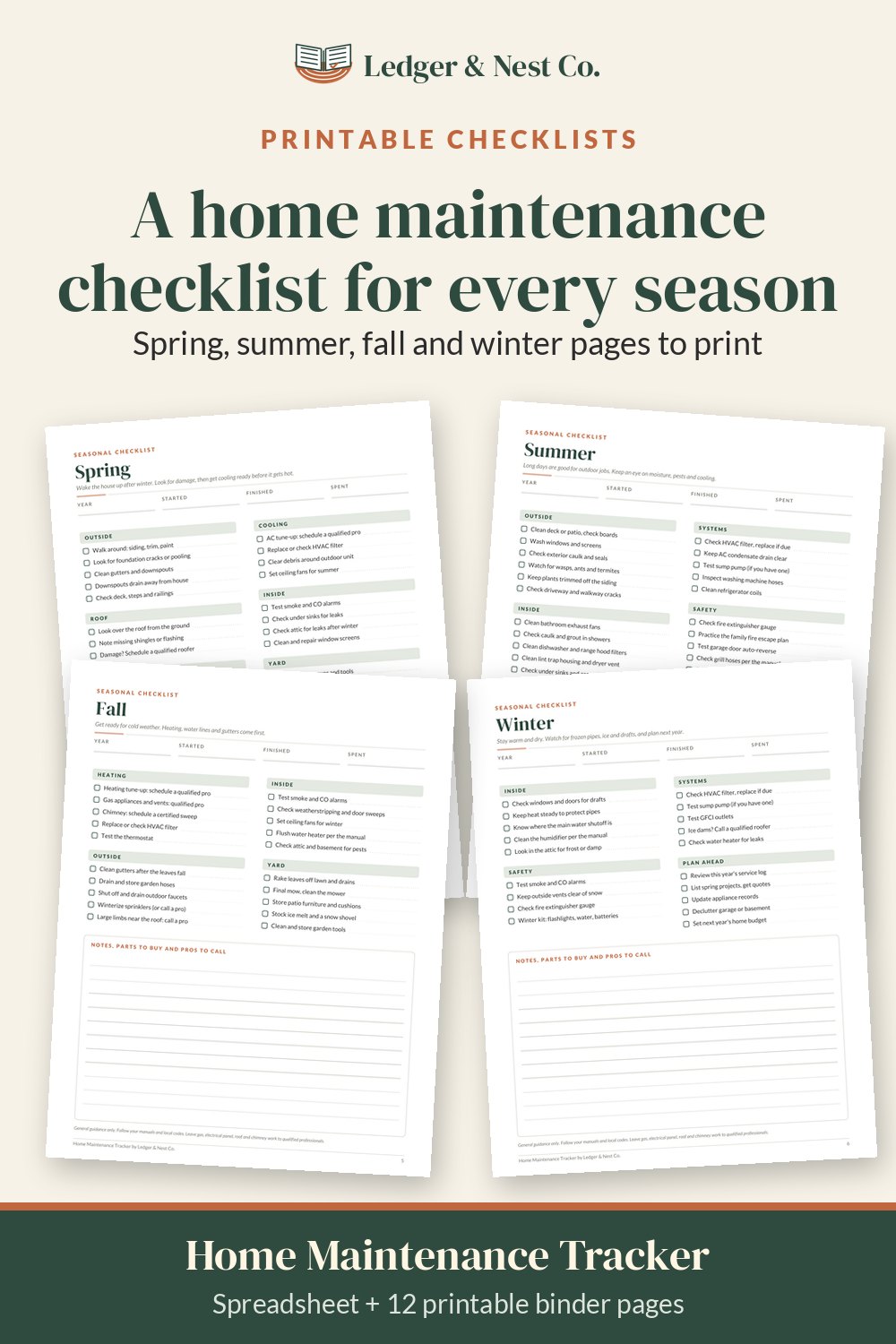
That's exactly why we made the Home Maintenance Tracker. It's a Google Sheets tracker where you can log each task, the date you did it, and what's coming up next. If it would help you, it's there. If a notebook works better for you, that's great too. The point is having one place to look.
The short version
Fall maintenance is mostly small jobs done on time. Start with the easy wins (filter, alarms, outdoor faucets), book the pro jobs early before everyone else does, and write it all down so next fall is even easier.