
How to Set a Christmas Budget You'll Actually Stick To
Heads up: this post contains affiliate links. If you buy through them, we may earn a small commission at no extra cost to you. This is general planning guidance based on research, not financial advice. Learn more.
The holidays have a way of costing more than anyone planned. It's rarely one big purchase. It's the extra gift for a coworker, the second trip to the store for wrapping paper, the shipping, and the food. By January, the total can be a surprise.
A Christmas budget doesn't have to be strict or joyless. It's just a plan that you make before the shopping starts, so the season feels good and the bill in January does too. Here's how we'd set one up, step by step.
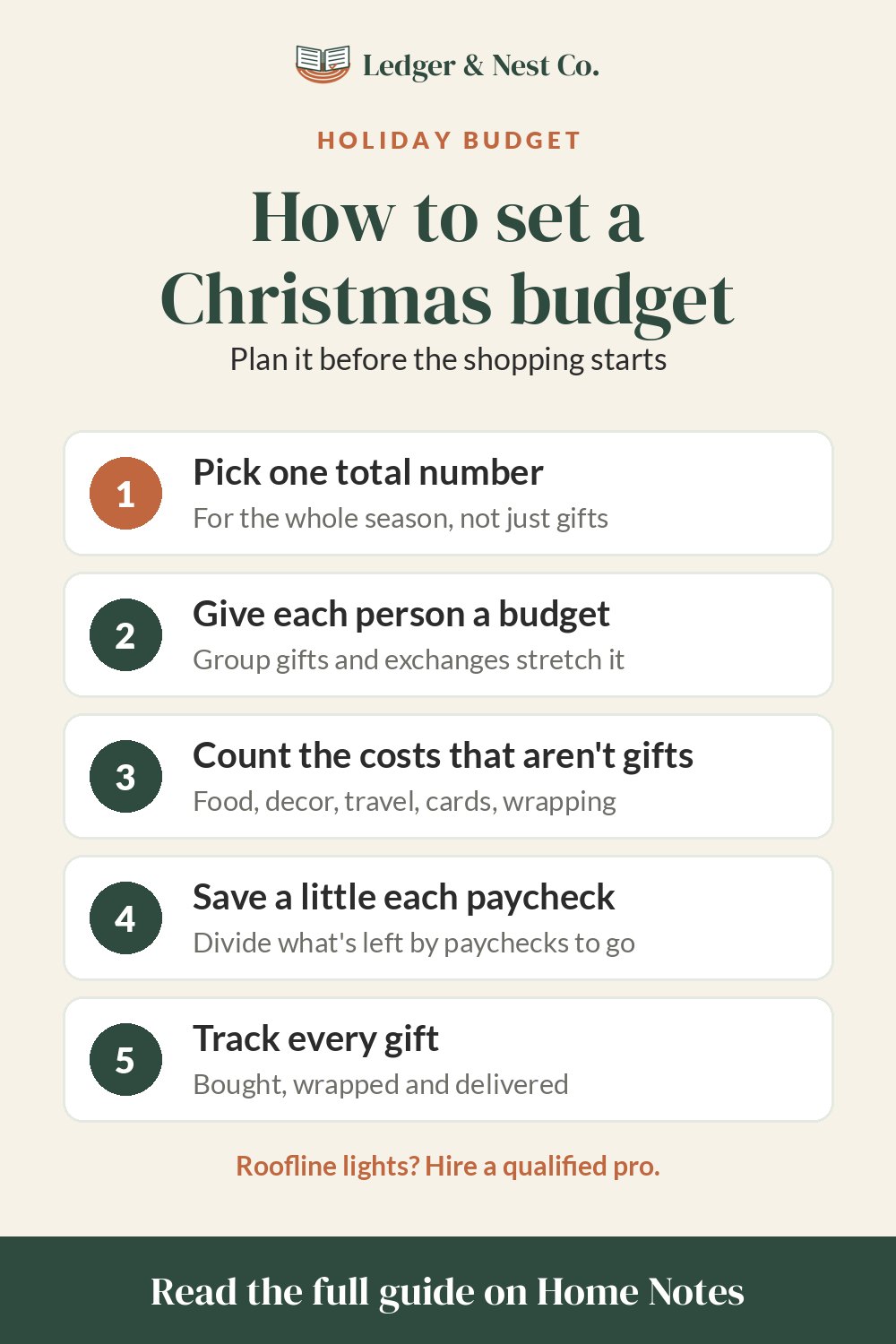
Step 1: Pick one total number
Start with the total you are comfortable spending on the whole season, not just gifts. Look at what you can pay for without carrying a balance into the new year. If you kept receipts or statements from last year, they can help you see what the holidays really cost you.
Write the number down. Everything else in this plan fits inside it.
Step 2: List everyone you buy for
Make a list of every person or household you plan to give a gift to. It helps to group them: family, friends, kids, coworkers, teachers, neighbors, and anyone else. Then give each person a budget.
A few tips for this step:
- Be honest about the small gifts. Teacher gifts, a host gift, and stocking stuffers add up.
- Decide on group gifts early. One gift from the whole family can go further than several small ones.
- Talk to family about a gift exchange or a spending limit if that would help everyone.
Add up the per-person budgets. If the total is more than your Step 1 number, trim now, before anything is bought.
Step 3: Count the costs that aren't gifts
This is the part that catches most people. Gifts are only one piece of the holidays. Make a list of the other costs and give each one a planned amount:
- Food and drinks, including hosting and holiday baking
- Decorations and a tree
- Travel, including gas, flights, or a place to stay
- Cards and postage
- Shipping gifts to people who live far away
- Wrapping paper, tape, bags, and tags
- Events, parties, and outings
- Charity and giving
What to look for in wrapping supplies: reusable gift bags and a roll of paper that works for any occasion can cut down on last minute buys.
- Look for: reusable gift bags
- Look for: wrapping paper storage organizer
- Look for: gift tags and labels
Add these planned costs to your gift total. Again, if it's more than your Step 1 number, adjust now.
Step 4: Plan a "paid for" Christmas
If you are starting early, you can save for the holidays a little at a time instead of putting it on a card. Here's the simple math:
- Take your total holiday budget.
- Subtract anything you have already saved for it.
- Count the paychecks you have left before Christmas.
- Divide what's left to save by the number of paychecks.
That gives you the amount to set aside each payday. Moving that amount into a separate savings account or a labeled envelope right when you get paid makes it easier to stick to.
- Look for: budget envelopes or cash envelope wallet
If the per-paycheck number feels too high, that's useful to know now. You can lower the total budget, cut a category, or find a lower cost idea for a few gifts.
Step 5: Track as you go
A budget only helps if you check it. Every time you buy a gift, write down who it's for, where it came from, and what it cost. It also helps to track three things for each gift:
- Bought: you have it in hand or it's ordered
- Wrapped: it's ready to give
- Delivered: it's been given or shipped
This keeps you from buying two gifts for the same person, or finding a forgotten gift in the closet in February. Keep receipts in one place too, in case something needs to be returned.
- Look for: accordion file folder
If you notice one person or category creeping over, you can adjust early: choose a simpler gift, bake instead of buy, or move money from a category you didn't use.
Step 6: Shop with a plan
A few habits make it easier to stay on budget once you are in the store or online:
- Shop from your list, with the budget for each person next to their name.
- Watch shipping costs and deadlines, especially for packages going far.
- Set a limit for extra impulse purchases, or leave them off entirely.
- Keep a short list of gift ideas for each person, so you are not deciding under pressure.
- Look for: shipping boxes and mailers
Gift ideas that go further
If the per-person numbers feel tight, a few kinds of gifts tend to stretch a budget without feeling like a compromise:
- Something homemade. Baked goods, a jar of a favorite sauce, or a framed photo can mean more than a store bought gift.
- An experience together. A movie night, a hike, or a cooking night at home can be a gift for both of you.
- A family or group gift. One nicer gift from several people often goes further than several small ones.
- A gift exchange. For big families or friend groups, drawing names means each person buys one thoughtful gift instead of many.
- Something they will use up. Coffee, a favorite snack, or a candle is easy to choose and doesn't add clutter.
Whatever you choose, write it on your list with its cost, so it still counts toward the budget.
A note on holiday safety
Decorating is part of the fun, but some jobs are not DIY. If you want lights along the roofline or high on the house, consider hiring a qualified pro instead of climbing a ladder onto the roof, especially in cold or icy weather. Use outdoor rated lights and cords outside, follow the manufacturer's directions, and don't overload outlets. If an outlet or switch feels warm, sparks, or a breaker keeps tripping, call a licensed electrician.
Step 7: Check in after the holidays
In early January, take ten minutes to compare what you planned with what you spent. Which categories went over? Which came in under? Write down one or two things you'd change. That note becomes next year's starting point, and next year's budget will be easier and more accurate.
A quick printable version
- Pick one total holiday number
- List everyone you buy for, with a budget for each
- Plan the non-gift costs: food, decor, travel, cards, wrapping
- Work out how much to save each paycheck
- Track bought, wrapped, and delivered for every gift
- Keep receipts in one place
- Hire a qualified pro for roofline lights
- Do a January check-in
Keep the whole season in one place
We made the Christmas Budget and Gift Tracker for exactly this plan. It's a spreadsheet for Google Sheets and Excel with room for 40 people and 200 gifts, a holiday spending tab for the costs that aren't gifts, and a paid for Christmas savings plan that works out how much to save each paycheck. It also comes with 9 printable pages if you'd rather plan on paper. You can find the Christmas Budget and Gift Tracker on Etsy. If a notebook works better for you, that's perfect too. The point is to have the numbers in one place before the shopping starts.
The short version
Pick one total, give each person a budget, and plan the costs that aren't gifts. Save a little each paycheck if you can, track every gift as you buy it, and check in after the holidays. A plan made in November is what makes January feel calm.