
Home Maintenance Checklist: A Simple Month by Month Schedule
Heads up: this post contains affiliate links. If you buy through them, we may earn a small commission at no extra cost to you. This checklist is based on research and common homeowner guidance, not hands-on product testing. Frequencies are general guidance; always follow your manuals. Learn more.
Most home repairs don't start big. A clogged gutter, a dirty filter, or a slow drip under the sink turns into a bigger job when nobody notices it for a year. Regular maintenance is mostly small jobs, done on a schedule, so you catch things early.
This checklist is organized by how often each job comes around: monthly, every few months, twice a year, and once a year. Your home may need more or less, depending on its age, its systems, and where you live, so check your manuals and adjust.
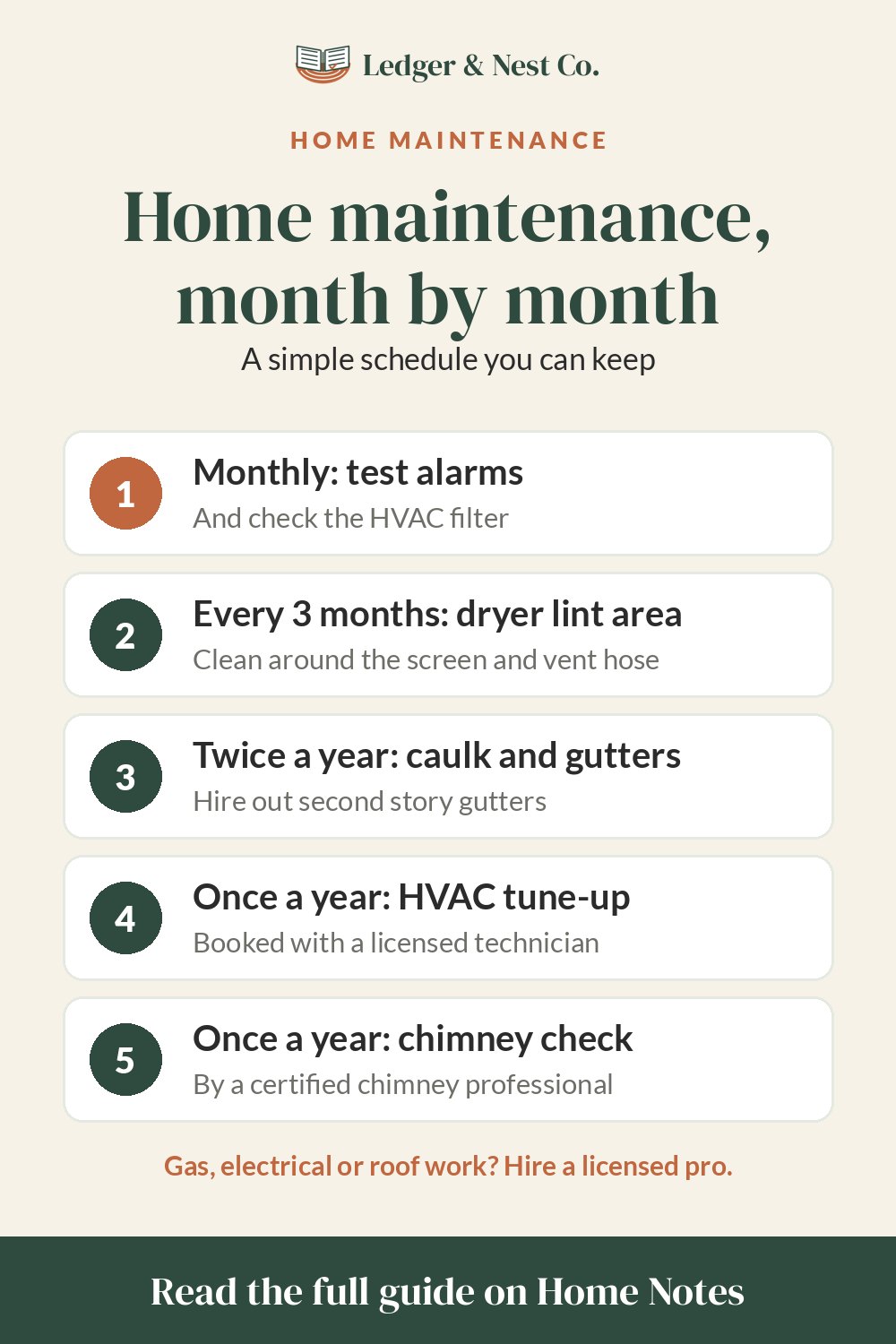
Every month
Test smoke and carbon monoxide alarms
Press the test button on each alarm. It takes a couple of minutes. Replace batteries when they are low, and check the manufacture date on the back, since alarms need to be replaced after a number of years.
- Look for: combination smoke and CO alarm
- Look for: alarm batteries
Check the furnace or HVAC filter
Pull out the filter and hold it up to the light. If it looks dusty or gray, it's time for a new one. Many households check monthly during heavy heating and cooling seasons and replace as the manufacturer recommends. Keep spares in your size.
- Look for: furnace filters in your size
Clean the range hood filter
Grease builds up fast in the kitchen. Many metal range hood filters can be soaked in hot, soapy water. Check your manual for the right way to clean yours.
Look for leaks
Take a quick look under the kitchen and bathroom sinks, around the toilets, and near the water heater. Catching a small drip early is a lot easier than dealing with water damage later.
- Look for: water leak sensors
Every three months
Run water in unused drains
If you have a guest bathroom or a basement sink you rarely use, run the water for a minute. This keeps the drain trap filled so sewer smells don't come up.
Clean the dryer lint area
You should clean the lint screen after every load. Every few months, also check the area around the screen and the vent hose behind the dryer for lint buildup. Lint is flammable, so this is worth doing.
- Look for: dryer vent cleaning kit
If your dryer is gas, leave any disconnecting or reconnecting to a qualified pro.
Check the garbage disposal and dishwasher
Clean the dishwasher filter if it has one, following the manual. Run the disposal with cold water and check underneath for drips.
Test the GFCI outlets
GFCI outlets are the ones with test and reset buttons, usually in the kitchen, bathrooms, garage, and outside. Press test, make sure the power cuts off, then press reset. If one won't reset, call a licensed electrician.
Twice a year
Reverse the ceiling fans
Many ceiling fans have a switch on the motor housing that changes the spin direction. A slow clockwise spin in winter can push warm air down, and a counterclockwise spin in summer can help a room feel cooler. Check your fan's manual to confirm.
Check caulk and weatherstripping
Look at the caulk around tubs, showers, sinks, and windows. If it's cracked or pulling away, scrape it out and recaulk. Check the weatherstripping around exterior doors for gaps. The How to Fix Drafty Windows and Doors post walks through the supplies to look for.
- Look for: caulk and caulk gun
- Look for: weatherstripping
Clean the gutters
Spring and fall are common times to clean gutters, once the leaves are down. Make sure water flows out the downspouts and away from the foundation. If your gutters are on a second story or the roofline is steep, hire a gutter or roofing pro. Ladder falls are a real risk.
- Look for: gutter cleaning scoop
- Look for: work gloves
Do a seasonal walk around
Walk around the outside of the house. Look for cracked siding, peeling paint, loose railings, and branches touching the house. Check the roof from the ground with binoculars or your phone's zoom. Don't climb on the roof; call a licensed roofer if you see problems.
Once a year
Book an HVAC tune-up
Have a licensed HVAC technician check your heating system before winter and your cooling system before summer. This matters even more with a gas furnace or boiler. Gas appliances are not a DIY repair. If you ever smell gas, leave the house and call your gas utility from outside.
Have the chimney inspected
If you have a wood burning fireplace or stove, have the chimney inspected and cleaned by a certified chimney professional before you use it for the season. Gas fireplaces should be serviced by a qualified technician.
Check the water heater
Look around the base for rust or drips, and keep the area clear. Many manufacturers recommend flushing the tank on a schedule to remove sediment. Check your manual. If it's a gas water heater, leave repairs and relighting problems to a licensed plumber or your gas company.
Test the main water shutoff
Make sure you can still find it and that the label is still there. If the valve is stuck or leaking, call a licensed plumber rather than forcing it.
Review your home inventory and documents
Once a year, update your home inventory with anything new, and check that your insurance, warranties, and important papers are in one place.
Seasonal checklists
Some jobs are tied to the season, not the month. For fall, the Fall Home Maintenance Checklist covers gutters, filters, and outdoor faucets. Before real cold arrives, How to Winterize Your Home covers pipes, heating, and drafts.
Leave these to a licensed pro
- Anything with gas lines, gas appliances, or gas fireplaces
- Work inside the electrical panel, new wiring, or outlets that won't reset
- Roof repairs or anything that means climbing on the roof
- Plumbing inside walls or under floors, and any valve that is stuck or leaking
A quick printable version
- Monthly: test smoke and CO alarms
- Monthly: check the HVAC filter
- Monthly: clean the range hood filter
- Monthly: look for leaks under sinks and around toilets
- Every 3 months: run water in unused drains
- Every 3 months: clean the dryer lint area and vent hose
- Every 3 months: test GFCI outlets
- Twice a year: reverse ceiling fans
- Twice a year: check caulk and weatherstripping
- Twice a year: clean gutters (hire out second story gutters)
- Yearly: book an HVAC tune-up
- Yearly: chimney inspection, water heater check, test the main shutoff
Never wonder when you last did it
The hardest part of home maintenance isn't the work. It's remembering when you last did each job and when it's due again. We made the Home Maintenance Tracker for that. It's a spreadsheet for Google Sheets and Excel that comes with 44 maintenance tasks already filled in; you enter the date you last did each one and it works out when it's due next. It also has a service log and appliance records, plus 12 printable pages. You can find the Home Maintenance Tracker on Etsy. If you are also planning a project, the Whole Home Bundle pairs it with our Renovation Planner Kit. And if a wall calendar works better for you, use that. The point is to write it down.
The short version
Do a few small checks every month, a few more every season, and book the big inspections once a year. Keep a record of what you did and when. Leave gas, electrical, roof, and in-wall plumbing work to a licensed pro.